Understanding Formal Shirt Cuffs
The cuff is a small detail with a large effect. It finishes the sleeve, frames the hand and quietly tells people how formal you mean to be.
Options Mall Menswear Journal — Mumbai
Of all the details on a formal shirt, the cuff is the one you see most often yourself. It is there every time you shake a hand, write a note, reach for a coffee or check the time. Other people see it too, especially when you wear a jacket, where a slim band of shirt cuff showing beyond the sleeve is one of the quiet signatures of a well-dressed man.
Yet cuffs rarely get much thought. Most men wear whatever cuff their shirt happens to have. Understanding the main cuff styles, how they fasten and when each is appropriate makes it easier to choose shirts for different occasions, and to wear them with a little more confidence. This essay covers the essentials.
What a cuff actually does
A cuff is the band of fabric that finishes the end of a sleeve and closes around the wrist. Like the collar, it is usually made from several layers, including an interlining that helps it hold its shape. Above the cuff, a short opening in the sleeve, called the placket, lets your hand pass through when the cuff is undone.
Functionally, the cuff keeps the sleeve in place at the wrist. Visually, it creates a clean edge that frames the hand, and its style signals formality. The two broad families are cuffs that fasten with buttons and cuffs that fasten with cufflinks. Our cuff studio shows each in close-up.
A cuff is the full stop at the end of a sleeve. Its style decides whether the sentence reads casual or formal.
Barrel cuffs: the everyday standard
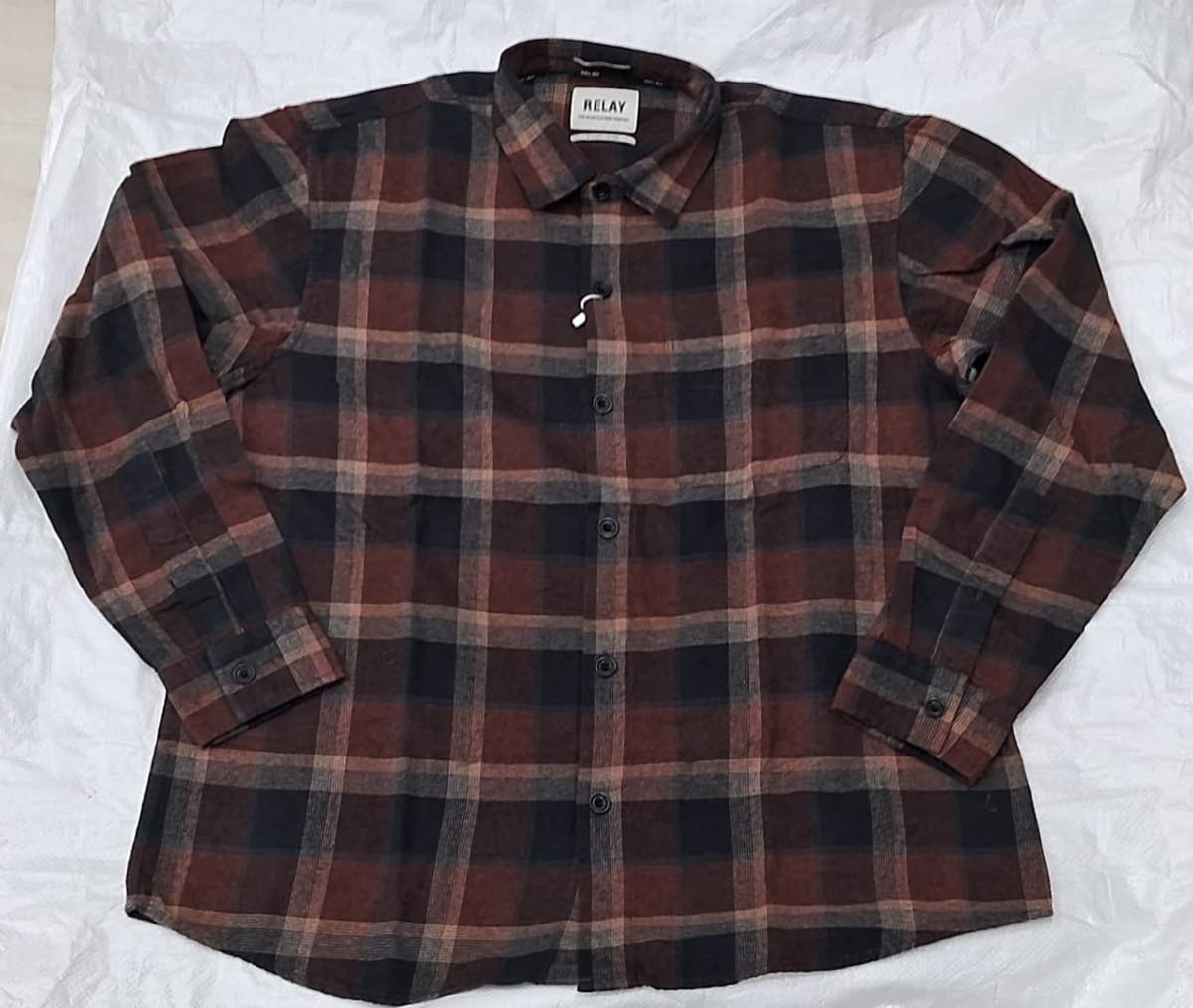
The barrel cuff is by far the most common. It is a single layer of cuff that wraps around the wrist and fastens with one or more buttons. The burgundy check shirt on the cover of this essay has simple single-button barrel cuffs, as do most office and casual shirts.
One-button barrel cuff
Clean and unfussy, the one-button cuff suits almost any shirt, from relaxed checks to crisp office wear shirts. It sits neatly under a jacket and works comfortably with a watch.
Two-button barrel cuff
A slightly deeper cuff with two buttons side by side or one above the other. It looks a touch more substantial and is often found on dressier shirts.
Adjustable barrel cuff
Some barrel cuffs have two buttons placed side by side so you can choose a tighter or looser fit at the wrist. This is useful if you wear a larger watch on one wrist or prefer a different fit on each side.
Barrel cuffs are practical, easy to wear and suitable for the great majority of professional settings. If you are building an everyday wardrobe of men's corporate shirts, most of them will have barrel cuffs.
Double cuffs (French cuffs)
The double cuff, commonly called the French cuff, is the most formal everyday cuff. It is cut twice the usual depth, then folded back on itself so that it forms a double layer around the wrist. It has no buttons; instead, it is fastened with cufflinks passed through holes on both sides.
When fastened, the two ends of a double cuff are usually brought together and held side by side by the cufflink, so the cuff projects slightly from the wrist in a neat, rounded shape. It looks substantial and polished, especially under a suit jacket.
When to wear double cuffs
Double cuffs suit formal occasions: important meetings, ceremonies, weddings, black-tie and evening events. They pair naturally with suits and ties. In most offices, French cuffs are welcome but not necessary; they can look slightly overdressed with chinos or without a jacket.
Choosing cufflinks
Keep cufflinks in proportion and in harmony with other metals you wear, such as a watch case or belt buckle. Simple silver, gold-toned or enamel designs work for business; more decorative pieces suit celebrations. Silk knots are an informal, colourful alternative.
Double cuff and French cuff describe the same thing: a long cuff that folds back on itself and fastens with cufflinks. A barrel cuff is a single cuff that fastens with buttons. A convertible cuff is a barrel cuff that can also take cufflinks.
Convertible cuffs
A convertible cuff is a barrel cuff with a button, but also a second buttonhole so it can be worn with cufflinks instead. It does not fold back like a double cuff, so it looks slimmer, but it offers flexibility for a man who wants the option of cufflinks without committing to French cuffs. It is a useful choice for a shirt you intend to wear both at the office and at an evening function.
Cuff corners and shapes
The corners of a cuff can be shaped in several ways, and while this is a subtle detail, it affects the character of a shirt.
- Rounded corners look soft and classic and are the most common choice on barrel cuffs.
- Angled or mitred corners are cut diagonally, giving a sharper, more tailored look.
- Square corners are clean and formal, and are often seen on double cuffs.
Cuff shape works alongside collar shape. A sharp spread collar with angled cuffs looks crisp and modern; a softer button-down collar sits naturally with rounded cuffs. For more on collars, see how to choose the right shirt collar, and for other finishing details such as plackets and stitching, see the details section of our studio.
How a cuff should fit
Whatever the style, the cuff should sit at the point where your wrist meets your hand when your arms hang naturally. It should be snug enough not to slide down over the hand, yet loose enough to slip over a watch if you wear one. A useful test is to slide a finger or two inside the fastened cuff: it should fit without strain.
When you wear a jacket, aim for a small amount of cuff showing beyond the jacket sleeve. Too much looks like the shirt is oversized; none at all hides one of the neatest details of formal dressing. Sleeve length and cuff fit are covered in more depth in how to choose the right formal shirt fit and the common fit problems guide.
Cuffs and occasion
A simple rule of thumb: barrel cuffs for everyday office wear and business-casual, double cuffs for formal events and moments when you want to look your most polished, and convertible cuffs when you need both. Casual shirts, like the check on the cover, nearly always have barrel cuffs, and many men simply roll them back on relaxed days.
For a dressier office look, a white or pale blue shirt with double cuffs, a navy suit and understated cufflinks is hard to fault. For daily work, a semi-spread collar with neat barrel cuffs under a blazer is reliable and comfortable.
Finishing well
Cuffs are a small detail, but they complete the look of a formal shirt. Know the difference between barrel, double and convertible cuffs; choose the style that matches the occasion; and make sure the cuff sits at the wrist with a little showing beneath your jacket. Those three habits are enough to make your shirts look more deliberate.
To explore how cuffs fit into the wider anatomy of a shirt, read understanding shirt construction and details. To see different cuff styles in person, visit Options Mall in Vile Parle West or call +91 8369381345 to ask about current formal shirt styles.